Condo And Townhome Living Options In Bellevue
May 28, 2026
May 28, 2026
Wondering whether a Bellevue condo or townhome is the better fit for your lifestyle? If you want less maintenance, a convenient location, and a home that lines up with how you actually live day to day, Bellevue gives you more than one strong option. The key is understanding how these home types differ by neighborhood, ownership structure, space, parking, and commute access. Let’s dive in.
In Bellevue, condos and townhomes can serve very different goals. Condos usually prioritize location, shared amenities, and low-maintenance living, while townhomes usually offer more space, a private entry, and garage convenience.
That broad difference matters, but Bellevue adds another layer. Where you buy often shapes your day-to-day experience just as much as the home type itself. Some areas lean more urban and transit-focused, while others offer a mixed-use feel with a wider range of layouts.
Bellevue’s long-range housing plan places Downtown, BelRed, Wilburton, and East Main in the city’s Urban Core. These are the areas where the city expects more high-rise and mid-rise apartment and condo buildings, along with strong access to jobs, retail, transit, and other everyday amenities.
Crossroads, Eastgate, and Factoria are planned as mixed-use areas. In these locations, Bellevue expects a mix of mid-rise apartments plus smaller apartments and townhomes, which can give you more variety if you are comparing layout, price point, and maintenance needs.
Bellevue also allows housing types such as duplexes, triplexes, cottage homes, and townhomes in neighborhood centers and residential areas. That means townhome choices are not limited to one part of the city, even though many buyers focus on areas near major employment and transit corridors.
Downtown Bellevue is the city’s primary economic and employment center. If you want a more urban lifestyle, this is often where condo living feels the most complete, with easy access to offices, shopping, dining, and transit.
BelRed is being reshaped into mixed-use, transit-oriented neighborhoods. The city highlights new light rail access, pedestrian and bike improvements, parks, open space, and additional residential and office growth, especially around the Spring District.
Wilburton offers a blend of single-family and multifamily housing close to downtown, parks, and its light rail station. East Main also falls within the Urban Core, making it part of Bellevue’s most transit-connected housing pattern.
Crossroads, Eastgate, and Factoria can be especially useful to compare if you want more options beyond a high-rise condo. These areas are expected to include a broader mix of mid-rise apartments, smaller apartments, and townhomes.
For many buyers, that translates into more flexibility. You may find homes that balance city access with a bit more interior space, a different building style, or a less vertical living experience.
Condo living in Bellevue is often the closest thing to a low-maintenance, lock-and-leave lifestyle. You generally have less exterior upkeep, less private yard space, and more shared building features than you would with a detached house.
Downtown Bellevue shows the amenity-heavy side of the condo market. Buildings like Bellevue Towers and One88 reflect the pattern many buyers picture when they think of city condo living: fitness spaces, concierge-style services, rooftop or terrace-style shared areas, and structured parking.
Bellevue’s housing plan also notes that urban-core condo buildings tend to be larger mid-rise and high-rise properties, with many units concentrated in studios and one-bedroom layouts. If your top priority is being close to work, transit, and daily conveniences, that can be a real advantage.
A Bellevue condo can make sense if you want to spend less time on upkeep and more time enjoying the location. Buyers often choose condos when walkability, shared amenities, and easy access to transit matter more than having extra square footage.
That can appeal to professionals, couples, downsizers, and commuters, but the real question is simpler: do you want your home to maximize convenience? If yes, a condo may deserve a close look.
Townhomes in Bellevue are more varied than many buyers expect. Some feel very close to single-family living, while others function more like attached homes in a planned community with shared exterior responsibilities.
A big distinction is ownership structure. Bellevue allows fee-simple ownership for townhome lots through unit lot subdivisions, which means some townhomes are owned more like a house than a condo.
That said, Bellevue townhomes are not always fee simple. The exact ownership setup depends on the specific project and its governing documents, so this is something you will want to verify before moving forward.
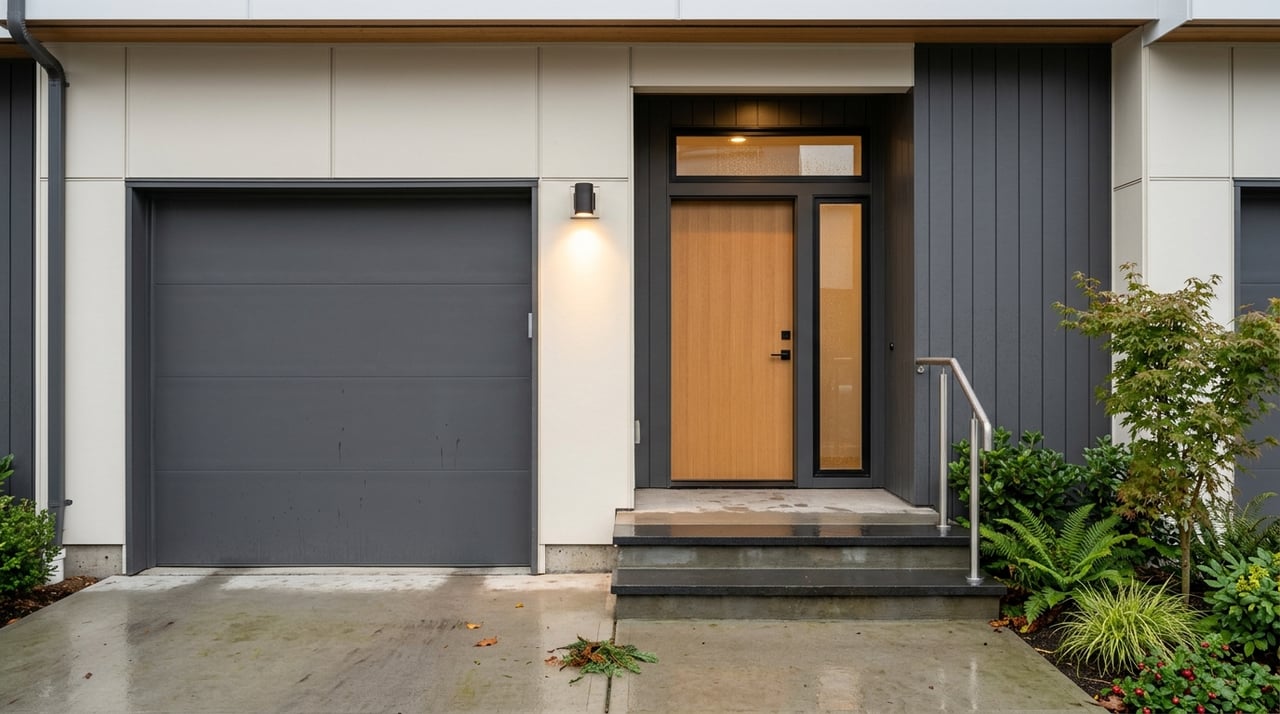
One reason buyers gravitate toward townhomes is the balance of space and maintenance. A newer Bellevue example, STRATOS in east Bellevue, includes layouts up to 2,188 square feet, 3-bedroom-plus-study plans, private 2-car garages, and private covered rooftop decks.
That example highlights the typical townhome tradeoff well. You often get more room, more privacy, and dedicated garage parking than a condo, while still avoiding much of the exterior maintenance that comes with a detached house.
Townhomes are often a strong match in Bellevue’s mixed-use areas such as Crossroads, Eastgate, and Factoria. They can also appear in neighborhood centers and residential areas where the city allows a broader range of housing types.
If you want more room than a condo but still want to stay connected to Bellevue’s job centers, daily services, and transit network, these areas are often worth comparing carefully.
Parking can shape your routine more than you expect. In Bellevue condos, parking is typically building-specific and often structured or assigned, so your experience depends heavily on the individual building.
For example, One88 has 132 parking stalls for 147 residences. That does not tell you everything about day-to-day parking availability, but it does show why buyers should review parking details early instead of assuming every unit comes with the same setup.
Townhomes more often include private or attached garages. In projects like STRATOS, private 2-car garages are part of the appeal, especially if you need storage, extra flexibility, or easier daily loading and unloading.
If commute flexibility matters, Bellevue’s transit-rich areas stand out. Downtown, Wilburton, BelRed, and East Main offer some of the strongest access to transit-oriented living.
Crossroads, Eastgate, and Factoria still offer mixed-use convenience, but often with a different housing mix and broader range of unit sizes. Since East Link’s 2 Line began service across Lake Washington on March 28, 2026, station-area housing in Bellevue has become meaningfully more car-optional than before.
Bellevue also has public parking options tied to light rail access, including the 1,500-stall South Bellevue Station garage and the 300-stall BelRed/130th park-and-ride. If you want a home that supports both driving and transit use, these nearby access points may factor into your search.
Whether you buy a condo or a townhome, association documents matter. In Washington, resale certificates are required for condominium and common-interest-community sales, and those documents disclose assessments and other association information.
This is where monthly dues, reserve funding, and planned special assessments come into focus. Washington’s reserve-study rules are designed to support long-term maintenance planning, so reviewing those materials can help you understand both current costs and possible future expenses.
A low monthly due is not always the full story. You want to look at what the dues cover, how well reserves are funded, and whether major work may be coming.
If your top priorities are walkability, shared amenities, and a more lock-and-leave lifestyle, a Bellevue condo may check the right boxes. This is especially true in Downtown, BelRed, Wilburton, and East Main, where transit access and urban convenience are strongest.
If you want more living space, a private entrance, and the convenience of a garage, a townhome may feel like the better long-term fit. That can be especially true in areas like Crossroads, Eastgate, and Factoria, where Bellevue expects a wider mix of smaller apartments and townhomes.
The best choice usually comes down to how you want to live, not just what category sounds better on paper. When you compare location, ownership structure, parking, HOA details, and commute patterns together, the right option tends to become much clearer.
If you are weighing condo and townhome options in Bellevue and want help narrowing the search, Realtor Keren can guide you through the neighborhoods, tradeoffs, and next steps with clear, local insight.
Stay up to date on the latest real estate trends.
Dedicated to helping you find the right fit—with honesty, energy, and heart.