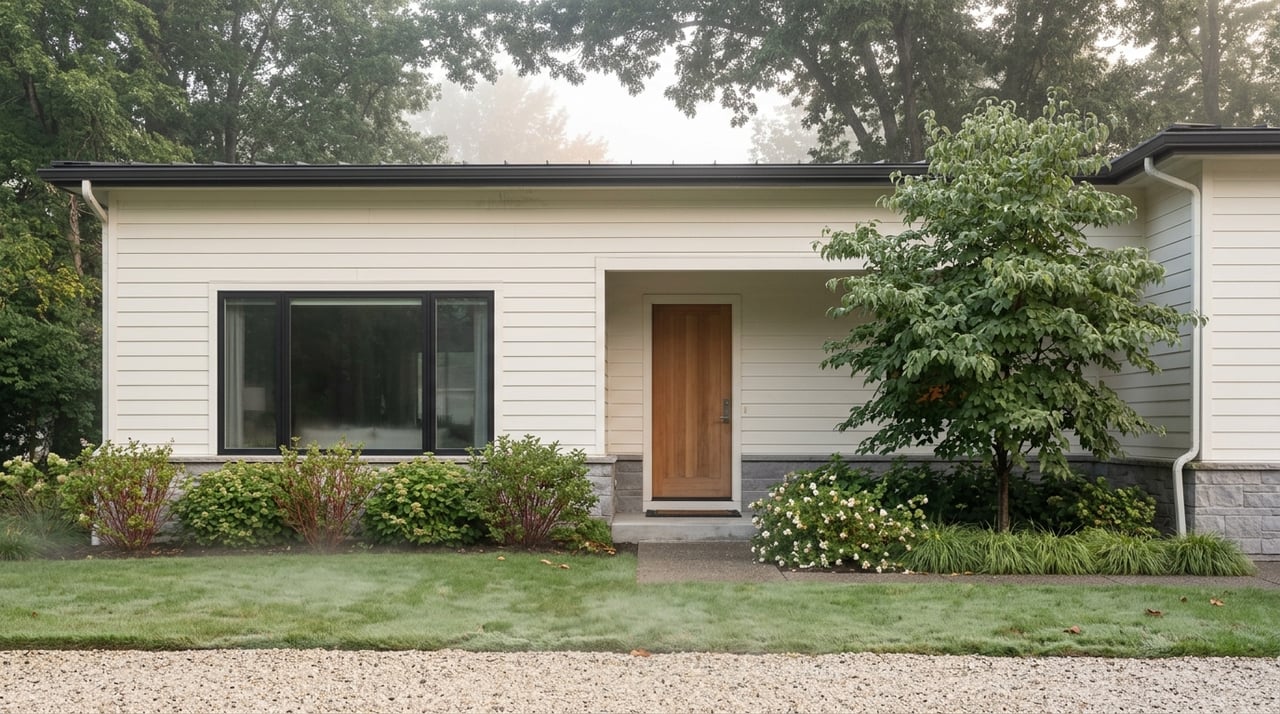
In Fall City, the Septic and Well Inspection Isn't the Hard Part. The Calendar Is.
August 27, 2026
August 27, 2026
A home in Fall City can be fully staged, priced right, and under a strong offer, and still lose three weeks to a form nobody thought to ask about. Not because the septic system is failing. Not because the well runs dry. Because King County's Time of Sale inspection turns up a gap in the paper trail that has nothing to do with how the property actually functions.
That's the part sellers in Fall City rarely see coming. A sewer-connected home in Issaquah or Bellevue clears its inspection contingency in days. A home on a private well and septic system in Fall City runs on a different clock entirely, and the properties most likely to hit that slower clock are exactly the ones that make up most of the town's housing stock: older farmhouses on rural-zoned acreage, built long before anyone thought to file a drawing with the county.
Any King County property with an on-site sewage system has to be inspected by a licensed On-Site System Maintainer before title can transfer. This isn't a lender preference or a smart precaution. It's written into King County Board of Health code, section 13.60.030, and it applies whether the buyer is paying cash or financing through a conventional loan. The seller schedules the inspection, the licensed maintainer files a report with Public Health, and a Notice of On-site Sewage System Operation and Maintenance Requirements, known on paper as NWMLS Form 22U, gets recorded with the King County Recorder's office before closing. The buyer has to receive a copy before the sale closes.
For a home already connected to municipal sewer, none of this exists. For most of Fall City, all of it does. Recent real estate coverage of the area has described most residential acreage there as governed by King County's rural zoning rather than city ordinances, with parcels typically running 2 to 10 acres and a housing mix of older farmhouses, custom-built rural homes, and ramblers. A lot of that stock predates the recordkeeping systems that make this process fast.
Every septic inspection depends on a document called an as-built, a drawing showing exactly where the tank, drainfield, and distribution box sit relative to the house and property lines. King County keeps these on file for most systems installed after 1998. Before that, the county's own guidance admits the records that do exist may not be accurate, legible, or as detailed as newer drawings, and plenty of older properties have no as-built on file at all.
When that happens, the licensed maintainer has to locate every component in the ground and draw the system from scratch as part of the inspection. That's not a form they fill out at the kitchen table. It's field work, and King County pricing guidance puts the added cost at roughly $300 to $500 on top of the standard inspection fee, which itself typically runs $300 to $900 depending on system size and accessibility.
If you're selling a farmhouse that's been in the family since before 1998, budget for this as a real possibility, not an edge case.
Here's the friction that catches even prepared sellers off guard. If the system is a conventional gravity septic, not a pump or pressure system, King County requires a stress test as part of the inspection. That test involves running up to 450 gallons of water through the system to confirm the drainfield handles a real load, not just a resting tank.
A gravity system inspection isn't a walk-through. It requires water and power on at the property, sometimes for hours, to complete the stress test King County requires.
Sellers who have already relocated and shut off utilities to save on a vacant property often don't realize they need to turn everything back on, sometimes for days, just to let the inspection happen. Any system with pumps or electrical components carries the same requirement. Plan the inspection while you're still living in the house, or budget time and a utility bill to restore service before the maintainer arrives.
Septic isn't the only rural infrastructure question in Fall City. Many properties here draw water from a private well, and that triggers its own set of expectations, separate from the septic inspection and running on its own timeline. Lenders, particularly for FHA, VA, and USDA-backed loans, generally require a passed water quality test and proof the well is operating properly before they'll fund the loan. A basic coliform water sample test through a certified lab has historically run in the $20 to $40 range per the Washington State Department of Health's guide for private well owners, though sellers should confirm current pricing with a certified lab rather than assume that number holds today.
The catch is turnaround time. Lab results don't come back the same day, and if the sample fails, a retest adds another round trip to the lab's schedule. On a well property, that's a second inspection clock running independently of the septic clock, and both have to clear before closing.
| Sewer-connected home | Septic and well home | |
|---|---|---|
| Governing requirement | None at time of sale | King County Board of Health Title 13, code 13.60.030 |
| Who performs it | No inspection required | Licensed On-Site System Maintainer |
| Paper trail risk | Minimal | As-built drawing may not exist for pre-1998 systems |
| Physical requirement | None | Utilities must be on for gravity system stress test |
| Water quality | Municipal, already tested | Private well test required by most lenders, lab turnaround adds days |
| Typical added cost | $0 | $300 to $900 for inspection, plus $300 to $500 if a new as-built is needed |
The dollar amounts here aren't what make a Fall City closing different. It's that every row on the right side of this table can independently slow the calendar, and they don't always happen in parallel.
King County revised its on-site sewage system codes effective April 1, 2025, the first substantial update to Title 13 in years. The county has been direct that a functioning system doesn't need upgrades because of the new code. Most of the changes touch permitting and construction standards for new or replacement systems rather than existing ones. One specific change worth knowing: septic tank lids now need to be secured, a small safety requirement aimed at preventing children or pets from falling in. If your system already has secured lids, this changes nothing for your sale. If it doesn't, it's worth asking your maintainer whether it comes up during the Time of Sale inspection.
For sellers weighing when to start this process, the sequence matters more than any individual step:
None of these steps are difficult on their own. Sequenced wrong, they're the difference between a closing that happens on schedule and one that slips by weeks under a nervous buyer.
Does every home in Fall City have a septic system and a well? Not every one, but private wells and on-site septic are common across the area's rural-zoned acreage, and buyers touring homes here should expect to ask about both rather than assume municipal utilities.
How long is a septic inspection report good for? Sources differ, with some describing a roughly six-month window and others citing up to a year. Confirm the exact timing with your licensed maintainer rather than assuming either number, since King County's own exemption language references reports completed within the last six months.
Who pays for the septic inspection, the buyer or the seller? In Washington, the seller is generally responsible for scheduling and providing the Time of Sale inspection report, while buyers commonly cover their own separate due diligence inspections as part of the purchase agreement.
The septic and well requirements here aren't obstacles to a sale. They're just a different set of steps than most sellers are used to, and the ones most likely to trip up a closing date are the paperwork gaps, not the systems themselves. A home with a functioning septic system and a clean well test can still lose weeks if nobody checked for an as-built drawing until the buyer's inspection period was already ticking.
If you're weighing a sale in Fall City and want a clear-eyed read on what your specific property will need before it goes on the market, Realtor Keren can walk through the timeline with you and help you get ahead of it. Start with a free home value estimate and a conversation about what your closing calendar should actually look like.
Stay up to date on the latest real estate trends.





Dedicated to helping you find the right fit—with honesty, energy, and heart.