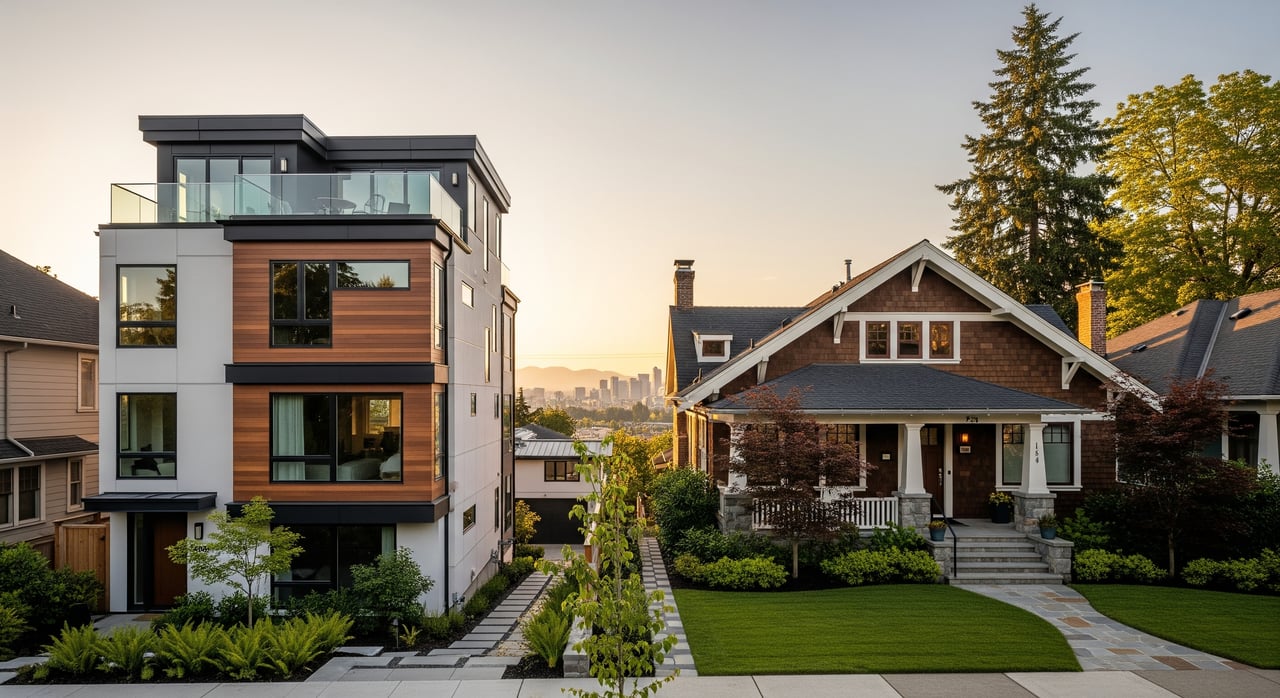
Townhome vs Single-Family in Bellevue: Find Your Best Fit
January 15, 2026
January 15, 2026
Trying to decide between a Bellevue townhome and a single-family home? With new transit options, evolving neighborhoods, and fast-moving inventory, the right choice comes down to your budget, maintenance comfort, commute style, and resale goals. You want clarity before you start touring. In this guide, you’ll compare costs, HOA considerations, privacy, parking, and long-term value, plus get a practical checklist and search tips tailored to Bellevue. Let’s dive in.
Bellevue’s housing stock varies by neighborhood. You’ll find more attached homes and townhomes in Bel-Red, Wilburton, Factoria, and areas close to transit-oriented development. Meanwhile, established single-family neighborhoods like West Bellevue and Bridle Trails offer larger lots and fewer attached options.
The opening of the East Link light rail in 2023 reshaped commute patterns for some areas. Properties within easy reach of stations can see stronger interest, particularly attached homes near employment hubs and retail. Zoning and redevelopment also shape what you’ll see: higher-density projects tend to cluster near downtown and Bel-Red, while many single-family enclaves retain lower-density character.
Townhomes often list below single-family homes on a per-unit basis, but price differences in Bellevue can shift by neighborhood, age, and lot size. Newer townhomes may command a premium compared to older attached options. For a true apples-to-apples view, compare recent sales by product type in your target micro-market.
Most townhomes include HOA dues. What they cover can range from landscaping and exterior maintenance to building envelope insurance and shared utilities. Single-family homes typically do not have HOA dues, unless part of a planned community. Always review the HOA budget, reserve study, meeting minutes, and any history of special assessments before you commit.
Both townhomes and single-family homes in Bellevue are subject to the same local tax rates, but your actual bill depends on assessed value. Newer construction and improvements can affect assessments. Review the most recent tax records and understand how future assessments could change your total monthly cost.
Fee-simple townhomes are often financed like single-family homes. Condominium-style townhomes can require additional lender or project approvals, and some loan programs have specific requirements for reserves and owner-occupancy ratios. If you plan to use FHA or VA financing, verify the project’s approval status early. Always confirm whether a townhome is fee-simple or condominium in its legal form.
Single-family homes put you in charge of exterior care: roof, siding, yard, driveway, and fences. Costs scale with lot size and the home’s age. Townhome HOAs often handle exterior items and common areas. Your responsibility may focus on the interior and limited exterior elements. Predictable dues can simplify budgeting, but special assessments can disrupt plans, so review documents carefully.
If you value privacy and a larger yard, single-family homes typically provide more separation, setbacks, and flexibility for outdoor living. Townhomes share walls and may offer patios or balconies instead of large yards. Noise varies by construction quality, so consider party wall design and insulation during tours.
Single-family homes commonly include driveways and garages with more on-site parking for guests. Townhomes might offer a private garage, tandem parking, or assigned spaces. Guest parking and HOA parking rules can be important in denser neighborhoods. If you host often or have multiple vehicles, confirm the parking setup before you fall in love with a home.
Many townhomes span multiple levels with stairs, which can be challenging for mobility needs. Single-level single-family options or layouts that support aging in place may suit long-term plans better. If walkability and transit access are top priorities, townhomes near light rail and retail can offer a convenient, low-maintenance lifestyle.
Single-family homes often draw a broader buyer pool, especially those seeking space and yards. Townhomes tend to attract first-time buyers, downsizers, and professionals who prioritize convenience and transit access. In Bellevue’s employment centers and light-rail-adjacent areas, quality attached homes can see strong interest.
Neighborhood dynamics and school attendance areas can influence demand and long-term value. In single-family neighborhoods with limited land supply, constrained inventory can support pricing over time. For attached homes, proximity to employers, transit, and amenities often drives appeal.
For townhomes, the HOA’s financial health matters. Thin reserves, frequent special assessments, or unresolved building issues can affect both enjoyment and resale. Review reserve studies, budgets, meeting minutes, and any litigation history to understand risk before you buy.
If you plan to rent the home now or later, check HOA rental caps, minimum lease terms, and local regulations for short-term rentals. These rules can affect both financing options and long-term flexibility.
Use this checklist to align your choice with your goals:
If your platform does not support certain filters, save curated searches labeled by neighborhood, transit proximity, and HOA ranges, and review new matches daily.
Choose a townhome if you want lower day-to-day maintenance, a newer build near transit and employers, and predictable monthly costs through HOA dues. This can be a great fit for first-time buyers, downsizers, and busy professionals.
Choose a single-family home if you value privacy, a yard, storage, and flexibility for projects like an ADU. This path can suit longer hold periods and buyers who prefer direct control over maintenance and exterior choices.
If you want help weighing the trade-offs in your target neighborhoods, reach out to a local guide who knows the micro-markets, HOA dynamics, and current inventory.
Ready to compare live listings and HOA details? Connect with Realtor Keren for neighborhood-level advice, curated searches, and a smooth path from tour to keys.
Stay up to date on the latest real estate trends.
Dedicated to helping you find the right fit—with honesty, energy, and heart.